Reviews
Five kinds of honour, with a walk of fame star as the example
Walk of fame directory: five kinds of public honour, who decides each, what inclusion is evidence of, and where a Walk of Fame star fits among them.
Public honors in this business look like one thing and are at least five, sorted by who decides, who pays, and what survives afterwards. Sort them properly and most of the arguments about what an honor means disappear.
This page is that sorting, with the best-known star of all as the worked example: a star on the Hollywood Walk of Fame.
The star in question: the Hollywood Walk of Fame
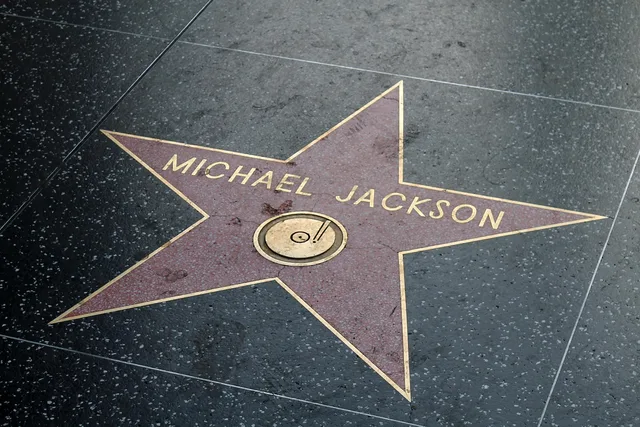
The Hollywood Walk of Fame is a landmark of more than 2,800 five-pointed terrazzo-and-brass stars set into the sidewalks of Hollywood Boulevard and Vine Street in Los Angeles. The stars are monuments to achievement in the entertainment industry. The Walk is administered by the Hollywood Chamber of Commerce and maintained by the self-financing Hollywood Historic Trust.
Its process shows the sequence this page is about. The Chamber evaluates nominations through a selection committee, which receives between 200 and 300 nominations a year. Only after a nomination is accepted does the Chamber collect a fee from the new honoree's sponsor, and that fee funds the creation and installation of the star, a replica plaque, an unveiling ceremony and maintenance of the entire Walk. The decision comes first and the money after, which makes a Walk of Fame star a commemorative marker, the third kind in the table below.
What to take away
- Every honor is a decision by a body under its own criteria. Who the body is, and how it assembled the field, is the whole of what an honor tells you.
- Nomination-driven programs record who was nominated and funded, not who was best. Absence from one is not a judgment.
- Money is not the test on its own. Where the payment sits in the sequence is: a cost after a committee decides is funding, a payment that produces the decision is a purchase.
Five kinds, and what each is evidence of
Who decides
- Competitive award
- A voting membership or a jury, from a submitted field
- Honorary or lifetime award
- A board or committee, without a competitive field
- Commemorative marker
- A committee acting on a nomination, with an installation cost
- Hall of fame or register
- A selection panel, often with a fixed annual quota
- Paid listing or trophy
- Whoever paid
What inclusion actually shows
- Competitive award
- That group's choice, inside its window, from the work campaigned to it
- Honorary or lifetime award
- The body chose to mark a career at that moment
- Commemorative marker
- A nomination was made, accepted, funded and scheduled
- Hall of fame or register
- The panel's choice, constrained by how many places existed that year
- Paid listing or trophy
- That someone paid
The first four are real records of real decisions. The fifth is a purchase, and it is designed to be indistinguishable from the others at a glance. What separates them is not prestige but process, and the process is published or it is not.
Five kinds of honour
Competitive
- Who decides
- Voting members or jury
- Competitive field
- Yes, submitted
- Cost involved
- No
- What it shows
- Group's choice
Honorary
- Who decides
- Board or committee
- Competitive field
- No
- Cost involved
- No
- What it shows
- Career marked
Commemorative
- Who decides
- Committee on nomination
- Competitive field
- No
- Cost involved
- Installation cost
- What it shows
- Nomination funded
Paid listing
- Who decides
- Whoever paid
- Competitive field
- No
- Cost involved
- Purchase price
- What it shows
- Someone paid
The Walk of Fame star is only one of these kinds, so it helps to see the others as real programs. The Academy Awards are the familiar competitive award: the Academy's voting members choose from the films submitted in each year's field. The Academy's honorary awards, decided by its board rather than by a competitive vote, are the lifetime kind.
The register kind is easiest to see in the National Film Registry, which honors films rather than performers. The Library of Congress adds 25 films to the National Film Registry each year, chosen for their cultural, historic or aesthetic importance; a film must be at least 10 years old, and for the 2024 selection over 6,700 films were suggested. A fixed number of places against thousands of suggestions is exactly why absence from a register says little.
The fifth kind has no flagship example by design: it is whatever award arrives with an invoice attached.
Nomination is the invisible filter
The commemorative and hall-of-fame kinds share a feature that changes how their lists should be read: nothing enters them unless someone starts a process.
A nomination has to be made, made completely, accepted against criteria, funded where a cost applies, and scheduled. Any of those stages can stop it, and the first never begins on its own. So the list records the intersection of who was nominated, who had a sponsor, and whose paperwork went through.
This is why the recurring complaint that an obvious name is missing almost never has the explanation people assume. Usually nobody nominated them, or nobody funded it. A nomination-driven list is a record of an administrative process, and reading it as a ranking imports a judgment nobody made.
Where the money sits in the sequence
Most commemorative programs involve a real cost: production of the object, installation, a ceremony, and long-term maintenance. Someone pays it, usually the nominating party or a sponsor rather than the recipient. The Walk of Fame is the standard case: the sponsor's fee is collected once the selection committee has accepted the nomination.
Order of the steps
Decision first, cost after
- First step
- Committee applies criteria
- Second step
- Installation is funded
- Third step
- Payment does not touch judgment
- What payment is
- Funding mechanism
Cost first, decision after
- First step
- Entry fee or gala ticket
- Second step
- Unsolicited congratulation
- Third step
- Deadline and payment required
- What payment is
- The judgment itself
That is a funding mechanism and it is not a scandal, but it does have to be visible, because the same feature is what a different kind of operation imitates. The test is the order of the steps.
Advantages
- Decision first, cost after. A committee applies published criteria, then an installation is funded. The payment does not touch the judgment.
Drawbacks
- Cost first, decision after. An entry fee, a compulsory gala ticket, a mandatory trophy purchase or a license to use a logo, arriving with an unsolicited congratulation and a deadline. Here the payment is the judgment.
The second pattern is legal in most places, which is why it persists. It sells status to people who want it, aimed hardest at people early enough in a career to be unsure what is normal.
The same reversal appears wherever hope is for sale. Notes on where the money goes wrong around young performers describe it in the setting where the pressure is worst.
What an honor is not evidence of
An honor does not prove a performance beat one that went unrecognized. Nor does it prove a body of work, since one decision came at one moment.
Across mediums, honors are not comparable at all. Theater voters saw one night of a run; screen voters watched a fixed object. The pillar on the eight-show week sets this out from the working side.
It is also not evidence about the field. Honors records survive best for large programs in a few countries and languages.
A directory built from English-language sources describes what was recorded, not what happened. That constraint runs through every kind of record on this site. The full argument is in why an era belongs to a production.
What a directory of honors should hold
The administering body as it names itself. The class of honor in the body's own wording. The decision date and, where an object exists, the installation date, stored separately. The nominating party where it is published. The source, meaning the body's own register or announcement. And the date the entry was last checked against that source.
Nothing biographical belongs in it. A commemorative record is a record of a decision and, sometimes, an object, and adding a person's age, family or location turns it into a profile with obligations it was never built to carry.
Where older paperwork of such programs survives, it is usually in local collections, not online.
The Library of Congress guide to performing arts research collections shows what tends to be kept and how it is described. For the Walk of Fame itself, the encyclopedia article on the Hollywood Walk of Fame is a reasonable orientation before reading the Hollywood Chamber of Commerce's own pages.
Reading an invitation
Sooner or later an unsolicited message arrives saying you have been selected. Four questions settle almost all of them.
Who is the body, and does anything about it predate its current website? Are the criteria published in advance? Is the committee named or at least described? And what payment is required, from whom, at which stage?
A body that answers all four plainly is a body you can evaluate. One that treats the questions as an insult has answered them. Neither outcome is about your work, which is decided in the rooms described in the guides to screen performance and to what series television asks of a performer.
Common questions
Does an honor help with casting?
Occasionally at the top of a cast, where a name assists financing or ticket sales. For most working performers the effect is small next to recent work and relationships.
Is a submission fee always a bad sign?
No. Festivals and some bodies have real processing costs and charge to consider an entry. A fee that buys consideration is ordinary. A fee that buys the award is not.
Should I list a paid honor on a resume?
Leave it off. The reader will assume a meaning the honor does not carry, and the discovery is worse than the omission.
How do I check whether an honor exists?
Find the administering body independently of whoever told you about it, then find its own published register for the year concerned. If neither exists, the honor is unverified, which is a different finding from false.
In this guide
- Hollywood Walk of Fame: how selection and dedication years work, and how to verify a starHow the Hollywood Walk of Fame selects stars, what a sponsor pays, why selection and dedication years differ, and how to verify a Hollywood star.
- Walk of fame directory search beyond Hollywood: which register to tryWalk of fame directory search beyond Hollywood: match a clue to one of six registers, search it by surname and record what the result shows.