Costs
Part of Action actors: how an action sequence is built and cut
Action actors facts: how action work is organized
Action actors facts: how physical work is planned and rehearsed, who holds safety responsibility on a union set, and what a stunt credit cannot tell you.
Action work looks like the least technical part of the business and is one of the most technical. It is planned by specialists, rehearsed against a clock, and governed by safety rules that outrank the director's preference. These notes on action actors facts cover what the job actually involves, one point at a time.
What to take away
- Screen fighting is choreography and camera work before it is athleticism.
- A stunt coordinator, not the director, usually decides what a performer is allowed to do.
- Being physically capable is worth very little on set unless you are also easy to direct and safe to work near.
How the work is organized
- Action is designed by a stunt coordinator or fight director, often before the actors are cast.
- Sequences are frequently previsualised, so the shots exist on paper long before anyone throws a punch.
- A stunt double is cast to match the performer's build, height and movement, not their face.
- A fight double may be a different person from a driving double or a wire double.
- Casting breakdowns for physical roles usually state the required movement skills plainly, because a mismatch is expensive to discover later.
- Skills that get listed and actually checked include martial arts, gymnastics, riding, driving, swimming and weapons handling.
- Claiming a skill you do not have is discovered on the first rehearsal day, and it ends the working relationship.
- Rehearsal for a sequence is a scheduled and budgeted item, and being unavailable for it can cost you the job.
- Choreography is learned in beats and counts, much like dance, and is often adjusted on the day for the lens.
- Camera angle, editing and sound do more of the work than force does, which is why real contact is unnecessary and unwelcome.
- Safety briefings are mandatory on a properly run set, and asking questions during one is expected rather than weak.
- If you are unsure a move is safe, saying so is part of the job. Coordinators would rather stop than repair.
- A performer can decline a specific stunt. What follows is a discussion about a double, not usually a dismissal.
- Insurance and production risk assessments limit what a lead may attempt, whatever the lead would prefer.
- Long fight days are physically cumulative, and pacing yourself across a schedule matters more than any single take.
- Injuries are reported through the production, and quietly working through one causes far more damage than admitting it.
- Continuity applies to bruises and costume damage as much as to dialogue, so the order of shooting rarely matches the story.
- Wire, harness and rigging work is done by rigging specialists, and the performer's task is to stay exactly where they are put.
- Physical training for a role is time you are usually expected to find, and it is not always paid.
- Physical preparation for one project does not transfer automatically to the next, since each production has its own demands.
- The reputation that gets you rehired is calm, punctual and coachable. That is true for everyone on the unit, and doubly so where risk is involved.
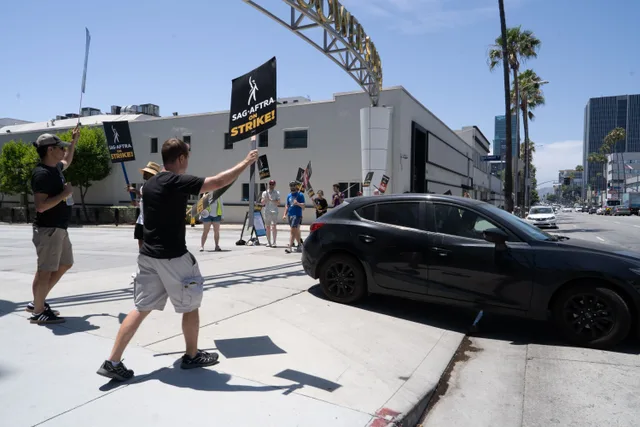
Safety on a professional set has a named structure behind it. In the United States the performers' union is SAG-AFTRA, and its agreements carry their own safety provisions, including a route for reporting conditions that are not safe. The workplace itself falls under OSHA, the federal agency that holds the employer responsible for the conditions the crew works in.
What a credit does and does not tell you
A credit tells you a performer appeared in a project. What a screen credit is, contractually, is a negotiated line, not a description of work.
What a Credit Can and Cannot Verify
What you can verify
- Project exists
- Yes
- Stunt team credited
- Yes
- Training discipline offered
- Yes
What you cannot
- Project exists
- Which shots they performed
- Stunt team credited
- How work was divided
- Training discipline offered
- That a person reached a level
So it does not tell you which shots are them, how the sequence was assembled, or how much a double performed. Publicity about who did their own stunts is marketing copy, not a record you can rely on.
That is worth remembering when reading any directory of action performers: the entries record credits, not the division of labor behind them. If you are studying how a sequence was built, watch the finished work and the behind-the-scenes material, and treat interviews as claims rather than documentation.
| What you can verify | What you cannot |
|---|---|
| That a project exists and a performer is credited | Which specific shots they performed |
| That a stunt team is credited on the production | How the work was divided within it |
| That a training discipline is offered somewhere | That any particular person reached a given level |
Getting into physical work
Training comes first, from a school or gym rather than a set. Build one discipline properly before adding another, then get the work on camera in a form somebody can watch.
Getting Into Physical Work
- Train at a school or gym
- Build one discipline properly
- Get the work on camera
- Assemble records and materials
- Get representation paid from bookings
- Check project is real and insured
A description of your ability persuades nobody. The material you assemble matters as much as the training itself, so the records and materials a performer keeps current deserve their own attention.
Beyond that, the ordinary rules apply. You still need representation paid from what you book — on union work, an agency franchised by SAG-AFTRA — and you still must check that any project asking for physical work is real and insured.
Read the general orientation on action actors with a plain list of the kinds of roles involved. Treat both as maps, not membership.
Common questions
Do I need to be a trained stunt performer to be cast in action roles?
No. Most action roles are acting roles that require movement competence and safety awareness. Stunt performing is a separate profession with its own training and its own route in.
Is it a problem to say I cannot do something?
It is a problem to say it late. Say it at the audition, say it again at the fitting, and say it before the sequence is designed around you.
How are young performers handled in physical scenes?
Far more cautiously, with additional supervision and legal limits on hours and activity. In the United States those limits come from state child labor laws, and many states require an entertainment work permit before a minor works on a production at all. The general considerations for child actors apply here with extra force, and no production should be asking a minor to work around them.
Does being very fit make me castable?
It makes you eligible for a narrower brief than most people expect. Fitness is a requirement in some roles and irrelevant in most. It is never a substitute for the acting.