Features
Part of 5 points worth checking on actors by era
Actors by era list: named anchors for each screen period
An actors by era list for US and Canadian screen work: anchor actors, productions and years for each period, from stock company to self-tape.
A reader who wants names rather than theory needs a lookup: which actors and which productions stand for each period of US and Canadian screen work. Five main periods and three transitions follow, each with anchor actors, anchor productions and years.
Scope is the United States and Canada, and the named examples are US productions unless stated otherwise. Each anchor is a credit, not a verdict: it shows who appears in a production that fits the rule for its period, and says nothing about talent or fame.
What to take away
- Five main periods carry the liststock company, studio contract, package and independent, broadcast and self-tape.
- Three stretches are filed separatelythe silent-to-sound change, the post-Paramount years and the span from 1975 to 2005.
- Every anchor is a named actor, a named production and a year.
- Each entry is a production with dates, with the performers attached as credits.
- Broadcast and package overlap in time because they are labeled on different axes.
The list at a glance
Eight rows cover the whole span, and each row names who anchors it and in which productions. The detail for every row follows in its own section, so the table works as an index for finding the period you need.
| Period | Years | Anchor actors | Anchor productions |
|---|---|---|---|
| Stock company | about 1900 to 1920 | Florence Lawrence, Mary Pickford, Charlie Chaplin | Biograph shorts (1908 to 1910), Making a Living (1914), Tillie's Punctured Romance (1914) |
| Silent to sound | about 1920 to 1930 | Buster Keaton, Clara Bow, Greta Garbo | Sherlock Jr. (1924), It (1927), Anna Christie (1930) |
| Studio contract | about 1930 to 1948 | Bette Davis, Clark Gable, James Cagney | Of Human Bondage (1934), It Happened One Night (1934), The Public Enemy (1931) |
| Post-Paramount | 1948 to 1950 | Olivia de Havilland, Gregory Peck | The Snake Pit (1948), Twelve O'Clock High (1949) |
| Package and independent | about 1950 to 1975 | Burt Lancaster, Kirk Douglas, Marlon Brando | From Here to Eternity (1953), Spartacus (1960), On the Waterfront (1954) |
| Broadcast | about 1950 to 2000 | Lucille Ball, Carroll O'Connor, Alan Alda | I Love Lucy (1951), All in the Family (1971), MAS*H (1972) |
| Uncovered span | 1975 to 2005 | Robert De Niro, Julia Roberts, Tom Hanks | Taxi Driver (1976), Pretty Woman (1990), Forrest Gump (1994) |
| Self-tape | about 2005 to now | No single anchor; the notice is the anchor | Stranger Things (2016), The Crown (2016), Wednesday (2022) |
Stock company, about 1900 to 1920
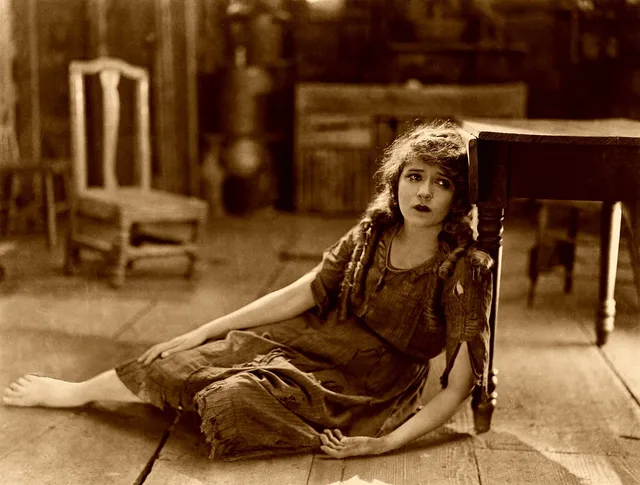
The stock company period is the one in which performers were held by a studio or a theatre company on salary and appeared in whatever the company mounted. The boundary rule is contract structure, so the anchors are people whose working terms were set by the company.
- 1908,Florence Lawrence, billed as the Biograph Girl from a contract player whose name the studio controlled.
- 1910Mary Pickford, who moved from Biograph to Independent Moving Pictures in and then to features.
- 1913,Charlie Chaplin, signed with Keystone in in Making a Living (1914) and Tillie's Punctured Romance (1914).
- 1914Mabel Normand, star of Tillie's Punctured Romance and of Keystone shorts through 1915.
- 1915Lillian Gish in The Birth of a Nation and Pearl White in The Perils of Pauline (1914).
Pickford's move to features is the exit from the period inside one career. File each entry on contract structure, not on the look of the films, and the placement holds even when a picture seems later or earlier than it is.
Silent to sound, about 1920 to 1930
This decade is a transition, not a period of its own. Silent production gave way to synchronized sound unevenly, so nothing here claims that every film changed at once. The boundary rule is the production's sound method, and each anchor is a credit in one kind or the other.
Because the change was uneven, a film's own production record decides which side of the transition it sits on. Neither the fame of its star nor its release year alone settles the question, so the production record is the first thing to read before an entry is placed.
Studio contract, about 1930 to 1948
The studio period is bounded by the contract: seven-year options, loan-outs between studios and a publicity department writing the biography. It ends where the studio system did. Every anchor below is credited in a production made under that arrangement, and the contract is what places each one.
- Bette Davis, under contract to Warner Bros. from 1932, who fought the system in court in 1936. She starred in Of Human Bondage (1934), Jezebel (1938) and The Little Foxes (1941).
- Clark Gable, under MGM contract, loaned to Columbia for It Happened One Night (1934), which won him an Academy Award.
- James Cagney, also at Warner Bros., in The Public Enemy (1931) and Angels with Dirty Faces (1938).
- Joan Crawford in Mildred Pierce (1945) and Errol Flynn in The Adventures of Robin Hood (1938).
- Humphrey Bogart in Casablanca (1942) and Barbara Stanwyck in Stella Dallas (1937).
The Production Code is a second checkable condition for these years. The MPPDA adopted it, and the Hays Office and the Production Code Administration are the named institutions to consult when a boundary depends on it. Treat each as its own kind of evidence, separate from the contract.
Post-Paramount, 1948 to 1950
These two years form a transition. The dated boundary decision is the U.S. Supreme Court's Paramount Pictures decision, in which the five majors owned or controlled theatres through subsidiaries or affiliates. Its consequences did not arrive all at once.
Read these anchors as work made while the old arrangement was ending. Treat the dates as a window, and file each production on its own conditions rather than pushing it onto the studio side or the independent side because of who starred in it.
Package and independent, about 1950 to 1975
In this period stars incorporated and sold their services through their own companies rather than a studio payroll. Burt Lancaster and Kirk Douglas both produced their own films in these years. The boundary is who held the deal, not who was famous.
- 1953Burt Lancaster in From Here to Eternity and Elmer Gantry (1960).
- 1960Kirk Douglas in Spartacus , made through his own company, Bryna Productions.
- 1951Marlon Brando from A Streetcar Named Desire through On the Waterfront (1954) to The Godfather (1972).
- 1972Steve McQueen in The Getaway and John Wayne in The Cowboys (1972).
- 1969Robert Redford in Butch Cassidy and the Sundance Kid .
Lancaster and Douglas are the producing examples. The last three entries are screen-credit anchors for the years rather than claims about any deal, so check the deal behind a production before tagging it to this period.
Broadcast, about 1950 to 2000
The broadcast period is bounded by distribution form: scheduled broadcast rather than an always-available library. A performer could be known for a weekly series and nothing else, and the credit medium changed with it. Its anchors are series-bound careers, and the broadcast era has its own timeline.
- 1951Lucille Ball in I Love Lucy . She ran Desilu Productions, which produced it.
- 1971Carroll O'Connor in All in the Family .
- 1972Alan Alda in MAS*H .
- 1955Jackie Gleason in The Honeymooners ( to 1956).
- 1966William Shatner in Star Trek ( to 1969).
- 1970Mary Tyler Moore in The Mary Tyler Moore Show ( to 1977).
The package and broadcast labels use separate axes. Package and independent status describes production or deal structure, while broadcast describes distribution, so one production can carry both tags. Assign each tag from its own production and distribution record, never from a single guess.
The span from 1975 to 2005
No period is assigned to this span from the dates alone. Productions are filed by their documented production and distribution arrangements instead. Wide-release and franchise distribution is a checkable condition, and it may overlap the package, independent or broadcast tags.
The 2005 endpoint marks where the separate self-tape index begins. It does not mark the end of any theatrical model, and a film in this span can sit under more than one tag. Keep the tag tied to the record you can point to.
Self-tape, about 2005 to now
The first audition in this period is a recording the performer makes alone, judged before anyone is in a room. Casting notices for network and streaming productions routinely ask for a self-tape first. The boundary is the casting method, and the notices themselves document it.
- 2016Millie Bobby Brown and Finn Wolfhard in Stranger Things .
- 2016Claire Foy and Olivia Colman in The Crown .
- 2022Jenna Ortega and Emma Myers in Wednesday .
No single actor anchors this period; the casting notice is the anchor. These credits place the productions in it and make no claim about how any one performer auditioned, so they work as dated markers and nothing more.
Why these dates and not decade names
Each date range above rests on a condition that a production either meets or does not: contract structure, casting method, distribution form or a published requirement. A stranger can apply that to an unfamiliar production. Style labels and decade names cannot, so the list leaves them out.
Boundary rules vs common rules
Documented condition rules
- Basis
- Contract, casting, distribution
- Dated
- Yes, with a range
- Checkable at source
- Yes
- Applies to unfamiliar work
- Yes
- Test passed
- Stranger can apply it
Common rules
- Basis
- Style labels, decade names
- Dated
- No
- Checkable at source
- No
- Applies to unfamiliar work
- No
- Test passed
- Only insiders can
The reasoning behind each boundary is set out in the conditions between eras, and the list above only applies that reasoning to named productions. A boundary drawn on style or on famous careers would not survive the same test.
Checking an anchor before you reuse it
A film actors search result is only as good as its source. Check screen credits at the AFI Catalog of Feature Films and the Library of Congress Moving Image Research Center. Name the record each time, not the memory of the film.
A regulatory boundary needs its own record: the MPPDA's Motion Picture Production Code, FCC broadcast records or SAG-AFTRA agreements. These are different kinds of evidence, not one universal regime.
Documentation survives unevenly. It is best for large productions, in a few countries, from recent decades, so any era list maps surviving paperwork before it maps the past. National library research guides to moving image collections show what actually survives and how it is described.
Common questions
Why is the list built from productions and not from people?
Once the boundary rule is fixed, the entries follow. Each is a production with its dates and the conditions it worked under. People enter only as credits attached to those productions, because a working life runs across boundaries.
Can one actor appear under two periods?
Yes. Filing a person under a period requires choosing which of their work counts, so each credit goes under the period of its own production. Kirk Douglas, for example, appears in both the post-Paramount and the package rows, each time for a different production.
Does an anchor mean the actor defined the period?
No. A claim that one career defines a period is a claim about a person, and it belongs in an essay with an argument behind it. An anchor is a credit in a production that fits the rule, and it quietly leaves out everyone else working at the time.
Do the anchors show which period's performers were better?
No. The list cannot tell you that a period was better or that its performers were more skilled. It also cannot cover its subject evenly, because survivorship shapes what is documented, and entries change as records are corrected, as a method for keeping a credit index current explains.